Unwanted Facial Hair: Treatment Options for Men and Women
If you've ever found yourself squinting into a magnifying mirror, tweezers in hand, wondering why that same stubborn hair keeps coming back on your chin or upper lip, you're far from alone. Unwanted Facial Hair Treatment Options for Men & Women,Unwanted facial hair is one of those things almost nobody talks about openly, yet it affects a huge number of people, men and women alike, for reasons that range from simple genetics to underlying hormonal shifts. The good news is that there's no shortage of ways to deal with it. The tricky part is figuring out which approach actually fits your skin, your hair type, and your lifestyle.
Unwanted Facial Hair Treatment Options for Men & Women,Some people are just looking for a smoother look before a big event. Others are dealing with the daily annoyance of razor bumps, ingrown hairs, or hair that seems to be growing in thicker or darker than it used to. Whatever brings you here, it helps to understand what's actually causing the hair growth before picking a treatment, because the "best" method really does depend on the person.
What Causes Unwanted Facial Hair?
Hair growth patterns come down to a mix of genetics, hormones, age, and just plain individual variation. For women, when coarse, dark hairs start showing up in places like the upper lip, chin, or along the jawline, doctors sometimes use the term hirsutism to describe it. This is often tied to elevated androgen levels, including testosterone, which can push hair follicles in that area to behave more like the follicles typically found on a man's face.
Polycystic ovary syndrome, or PCOS, is one of the more common underlying causes of hirsutism, but it's not the only one. Certain medications, other hormonal imbalances, and in rarer cases issues with the adrenal glands or ovaries can all play a role. That said, plenty of women develop noticeable facial hair without any identifiable hormonal condition behind it at all — sometimes it really is just genetics.
For men, of course, facial hair is a completely normal part of development. Still, plenty of men come in looking for treatment because their beard growth is unusually dense, they're dealing with unwanted hair creeping down the neckline, or they're simply tired of the razor burn and ingrown hairs that come with daily shaving.
One thing worth flagging: if facial or body hair growth suddenly ramps up or changes rapidly, especially alongside other signs like irregular periods or unexpected weight changes, that's worth bringing up with a doctor rather than just treating it as a cosmetic issue.
Common Facial Hair Removal Options
Shaving
Shaving is the old reliable — quick, cheap, and something most people can do at home without a second thought. It works by cutting the hair off at the surface of the skin rather than removing it from the root.
Here's a myth worth putting to rest: shaving does not make hair grow back thicker or darker. What actually happens is that the newly cut hair has a blunt edge instead of a natural taper, which can make it feel coarser or look more obvious for a little while as it grows out. If you have sensitive skin, though, frequent shaving can lead to irritation, razor bumps, or ingrown hairs, which is often what pushes people to look for something more permanent.
Threading
Threading is a technique that's been around for generations, using a twisted cotton thread to lift and pull individual hairs out from the root. It's especially popular for smaller, more precise areas like the eyebrows, upper lip, and chin, where you want clean, defined lines.
The upside is that it doesn't involve any chemicals or heat touching your skin. The downside is that it can leave some temporary redness or tenderness behind, particularly if your skin tends to be reactive.
Waxing
Waxing pulls hair out from the root in one go, which means the results generally last longer than shaving. It's a solid option for larger areas or for anyone who wants a few weeks of smoothness rather than a few days.
The trade-off is that it can be uncomfortable and sometimes leaves skin red or irritated afterward. If your skin is easily irritated or already inflamed, it's worth having a conversation with a professional before committing to waxing on the face.
Depilatory Creams
Depilatory creams take a different approach entirely, using chemicals to dissolve the hair right at the surface of the skin. They're convenient and painless in the sense that there's no pulling involved, but facial skin tends to be more delicate than skin elsewhere on the body, so reactions to the ingredients aren't unusual.
If you're going to try one, make sure it's actually formulated for facial use, follow the instructions closely, and consider doing a small patch test somewhere inconspicuous first to see how your skin reacts before applying it more broadly.
Laser Hair Removal for Facial Hair
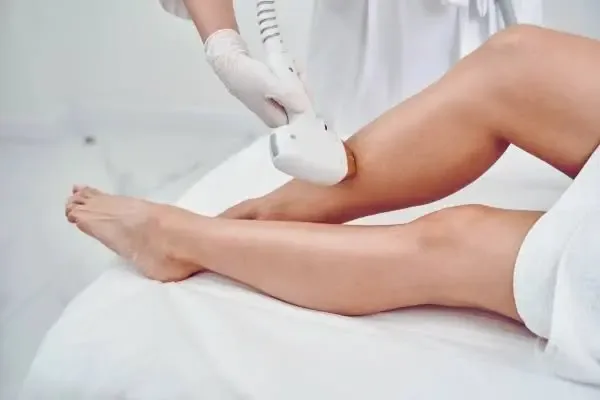
For people looking for something longer lasting, laser hair removal has become one of the most popular options. It works by using concentrated light to target the pigment inside the hair follicle. Over the course of several sessions, those follicles tend to produce hair that's finer, sparser, and far less noticeable than before.
This method is commonly used on the upper lip, chin, jawline, sideburns, and neck. It's also a favorite among men who are simply exhausted by the cycle of razor burn and ingrown hairs that comes with regular shaving.
How many sessions you'll need really depends on the person, since hair grows in cycles and not every follicle is active at the same time. That's why a single treatment is rarely enough — most people go through a series of sessions spaced several weeks apart to catch hair at different points in its growth cycle.
It's also worth setting realistic expectations, especially for women dealing with hormonally influenced hair growth. Because hormones can continue to stimulate new hair even after treatment, laser hair removal is best thought of as a long-term reduction method rather than something that guarantees permanent, total removal.
Is Laser Hair Removal Suitable for Every Skin Type?
Laser technology has come a long way and can now be used safely across a wide range of skin tones, but that doesn't mean one setting fits everyone. The specific laser type and settings need to be tailored to your individual skin tone and hair characteristics, which is exactly why this treatment should be handled by someone experienced. Using the wrong settings can increase the risk of burns, scarring, or changes in skin pigmentation.
Hair color matters just as much as skin tone. Because lasers target pigment, hair that has plenty of color to it responds best. Very light, white, gray, or certain shades of red hair often don't absorb the laser energy well, which means results in those cases can be disappointing. A consultation beforehand is really the best way to find out whether laser treatment makes sense for your particular combination of skin and hair.
Electrolysis for Facial Hair
Electrolysis takes a more individualized approach. A technician inserts a very fine probe into a single hair follicle and uses an electrical current to damage it at the root. Because it doesn't rely on pigment the way lasers do, electrolysis can be used on hair colors that lasers often struggle with, including light, gray, or red hair.
The trade-off is time. Since each hair is treated individually and hair grows in cycles, multiple sessions are usually needed to get through all the follicles in a given area.
When Should You See a Healthcare Professional?
Not every instance of unwanted facial hair points to something medical going on. But if hair growth suddenly increases or accelerates, particularly in women, it's worth getting checked out rather than assuming it's purely cosmetic.
Other signs to watch for alongside new facial hair include irregular periods, sudden or severe acne, thinning hair on the scalp, or other changes that suggest something hormonal might be happening. Since hirsutism can sometimes be linked to conditions like PCOS, figuring out the root cause can actually shape which treatment makes the most sense going forward. A doctor may want to look at your medical history, current medications, symptoms, and hormone levels to get a fuller picture.
How to Prepare for Laser Hair Removal
Before diving into laser treatment, a proper consultation should cover your skin type, hair characteristics, and what you're hoping to achieve. Be upfront with your practitioner about any medications you're taking, recent tanning or sun exposure, past scarring or keloids, and any existing skin conditions, since all of these can affect how your skin responds to treatment.
Sun protection matters both before and after sessions. It's generally recommended to avoid tanning and to use a broad-spectrum sunscreen of at least SPF 30 in the weeks surrounding treatment. Afterward, some temporary redness or sensitivity is normal, and keeping treated skin out of direct sun helps it heal properly.
What's the Best Option, and How Many Sessions Does It Take?
If you're looking for the option that offers the best long-term value, laser hair removal is generally considered the strongest choice for most people dealing with persistent unwanted facial hair. Unlike shaving, threading, or waxing, which only address hair that's already there, laser treatment works at the follicle level, gradually reducing how much hair grows back and how coarse it is over time. For anyone tired of the constant cycle of daily upkeep, that difference matters.
Most people considering laser treatment want to know upfront how many sessions they're signing up for. On average, a full course tends to run between six and eight sessions, spaced roughly four to six weeks apart. That spacing isn't arbitrary — hair grows in cycles, and at any given time only a portion of your follicles are in the active growth phase where the laser can effectively target them. Spacing sessions out gives the laser a chance to catch hair at different points in that cycle, which is why skipping straight to one or two treatments rarely produces lasting results.
Some people, especially those with hormonally influenced hair growth, may need occasional maintenance sessions once or twice a year after finishing the initial course, just to keep new growth in check. Others find that once they complete the full series, the reduction is enough that they rarely think about the area again.
For those with lighter, gray, or red hair that doesn't respond well to laser, electrolysis remains the better long-term option, though it typically requires more sessions overall since each hair follicle is treated individually rather than in broader passes.
Ultimately, the "best" option is the one that matches your hair color, skin type, and how much time you're willing to invest. A consultation at The Skin Care Studio is the most reliable way to get a realistic session estimate tailored to your specific hair and skin, rather than relying on general averages.
Choosing the Right Facial Hair Treatment
There isn't a single method that works best for everyone, and that's really the takeaway here. Shaving is convenient for ongoing maintenance. Threading and waxing offer a longer-lasting, root-level removal without a big time commitment. Laser hair removal can meaningfully reduce hair over time for many people, and electrolysis remains a solid option for lighter hair colors that don't respond as well to laser.
The right choice comes down to your skin type, your hair's color and texture, the area you're treating, your personal preferences, and, when relevant, any underlying health condition that might be contributing to the growth in the first place.
At The Skin Care Studio, anyone weighing their options can sit down for a real conversation about what they're dealing with and what they're hoping for. A personalized consultation is often the best way to figure out whether laser hair removal or another approach fits your needs.
A quick note: results vary from person to person, and no cosmetic treatment should ever be sold as a guaranteed fix. If you're noticing sudden or unusual hair growth, it's worth having that evaluated medically rather than treating it as a cosmetic concern alone.