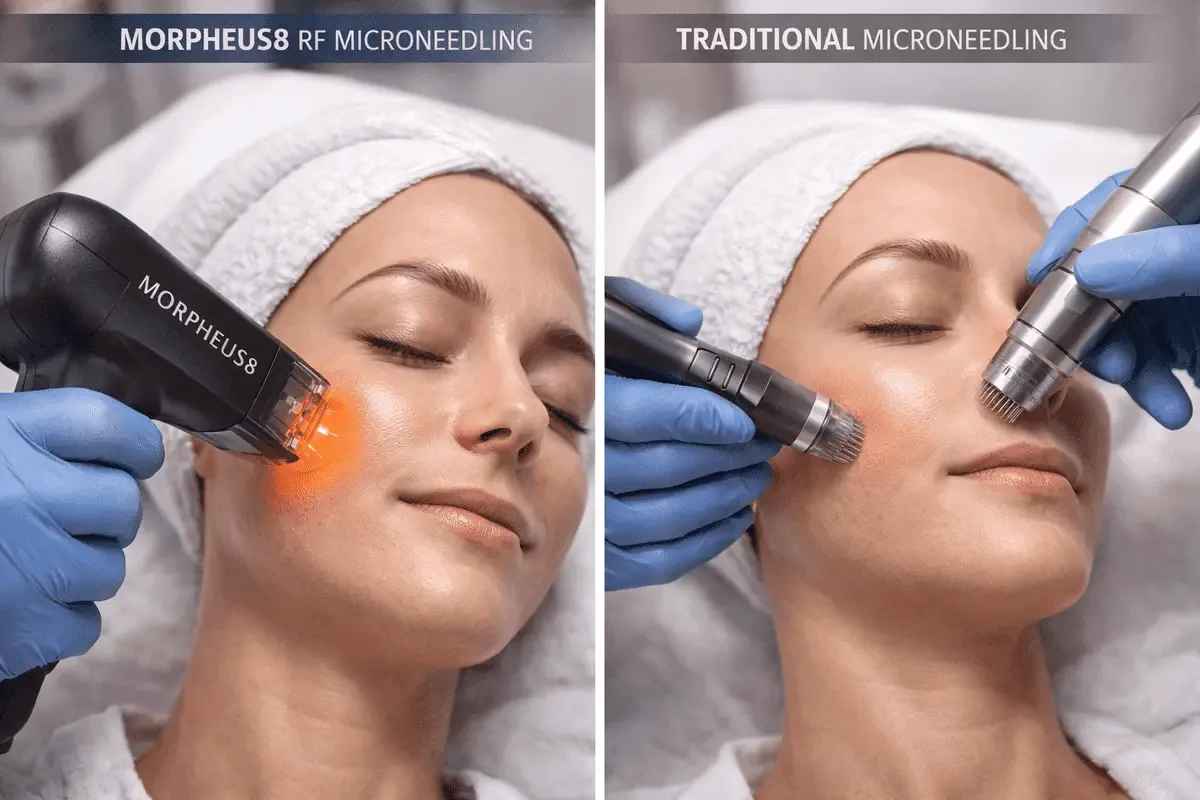
RF Microneedling vs Traditional Microneedling: What's the Difference?
Microneedling has become a popular skincare procedure for people looking to improve acne scars, uneven skin texture, enlarged pores, and signs of ageing. However, there are different types of microneedling treatments, and two commonly discussed options are traditional microneedling and Radiofrequency (RF) microneedling.
Although both procedures use tiny needles to create controlled micro-injuries in the skin, they work differently. Understanding the difference between RF microneedling and traditional microneedling can help you make a more informed skincare decision.
In this educational guide, we will explain how both treatments work, their benefits, differences, recovery periods, and which skin concerns they may address.
What Is Traditional Microneedling?
Traditional microneedling is a minimally invasive cosmetic procedure that uses a specialized device with very fine needles to create controlled microchannels in the skin.
These tiny punctures activate the body's natural wound-healing response, encouraging collagen and elastin production. Collagen is an important protein that supports skin structure, firmness, and elasticity.
Traditional microneedling is commonly used to improve:
Acne scars and uneven skin texture
Enlarged pores
Fine lines
Mild skin discolouration
Rough skin surface
Overall skin appearance
The treatment does not use radiofrequency energy. Its primary mechanism is controlled mechanical stimulation of the skin.
What Is RF Microneedling?
RF microneedling, also known as radiofrequency microneedling, combines traditional microneedling technology with radiofrequency energy.
During the procedure, tiny needles enter selected skin layers and deliver controlled heat through radiofrequency energy. This thermal stimulation works alongside the mechanical micro-injuries to encourage collagen remodeling.
RF microneedling may be considered for:
Certain types of acne scars
Fine lines and wrinkles
Enlarged pores
Uneven skin texture
Mild skin laxity
Skin firmness concerns
Unlike traditional microneedling, RF microneedling delivers additional thermal energy into targeted skin layers.
RF Microneedling vs Traditional Microneedling: Key Differences
The main difference is the technology used during each procedure.
Feature
Traditional Microneedling
RF Microneedling
Technology
Fine needles
Fine needles with RF energy
Main mechanism
Mechanical stimulation
Mechanical and thermal stimulation
Energy delivery
No RF energy
Radiofrequency energy
Collagen stimulation
Through controlled micro-injuries
Through micro-injuries and controlled heat
Skin concerns
Texture, pores, selected acne scars
Texture, selected acne scars, mild skin laxity
Treatment depth
Depends on device and settings
Depends on device and settings
Recovery
Usually mild redness and sensitivity
Redness, swelling and possible additional sensitivity
Treatment cost
Generally lower
Generally higher
Both procedures have different treatment settings and may not be suitable for every individual.
Which Treatment Is Better for Acne Scars?
Acne scars can develop in different forms, including ice-pick, boxcar, and rolling scars. The most appropriate treatment depends on the scar type, depth, and individual skin condition.
Traditional microneedling may help improve certain superficial and shallow acne scars by stimulating collagen production.
RF microneedling may provide additional benefits for selected deeper textural concerns because it combines needle stimulation with radiofrequency energy.
However, neither treatment is guaranteed to remove acne scars completely. Some patients may benefit from a combination of procedures selected by a qualified professional.
Which Treatment Is Better for Skin Tightening?
Traditional microneedling mainly focuses on improving skin texture through mechanical stimulation.
RF microneedling additionally delivers controlled heat into targeted skin layers, which can support collagen remodeling and improve the appearance of mild skin laxity.
For this reason, RF microneedling is often considered when skin firmness is one of the main concerns.
However, results depend on age, skin condition, treatment settings, and individual response.
Recovery Time and Possible Side Effects
Both treatments can cause temporary redness, swelling, sensitivity, and mild discomfort.
Traditional microneedling generally involves short-term redness and sensitivity. RF microneedling may also cause swelling, warmth, pinpoint bleeding, or temporary changes in skin texture.
Less common but more serious complications can include infection, scarring, burns, and pigmentation changes, particularly when procedures are performed incorrectly.
Proper skin assessment, sterile equipment, professional technique, and aftercare are important for reducing risks.
How to Choose Between RF and Traditional Microneedling?
Choosing between the two treatments requires an understanding of your skin concerns and treatment expectations.
Traditional microneedling may be considered for individuals primarily concerned with mild textural irregularities and certain superficial acne scars.
RF microneedling may be considered when acne scarring, skin texture, and mild skin laxity are concerns.
People with active skin infections, certain inflammatory skin conditions, or other medical contraindications may need to avoid these procedures.
A professional consultation is the best way to determine which option is appropriate.
Final Thoughts
Both traditional microneedling and RF microneedling are designed to stimulate the skin's natural repair processes, but they use different technologies.
Traditional microneedling relies on controlled mechanical stimulation, while RF microneedling combines this process with radiofrequency heat energy.
Neither treatment is universally better. The right choice depends on your skin condition, treatment goals, and professional assessment.
At The Skin Care Studio Lahore, understanding different skincare technologies can help you explore suitable options and make informed decisions about your skin health.
Frequently Asked Questions
1. Is RF microneedling different from regular microneedling?
Yes. Traditional microneedling uses tiny needles to create controlled micro-injuries, while RF microneedling also delivers radiofrequency energy into targeted skin layers.
2. Which is better for acne scars?
Both may help improve selected acne scars. RF microneedling may be considered for certain deeper textural concerns, depending on scar type and individual suitability.
3. Does RF microneedling tighten skin?
It may improve the appearance of mild skin laxity by encouraging collagen remodeling.
4. Is traditional microneedling less expensive?
Traditional microneedling is generally less expensive because it does not require radiofrequency technology.
5. Can both treatments be performed on all skin types?
No. Suitability depends on skin type, medical history, pigmentation risk, and device settings. Professional assessment is essential.
6. How long does it take to see results?
Results develop gradually as the skin produces and remodels collagen. The timeline varies between individuals and treatment types.