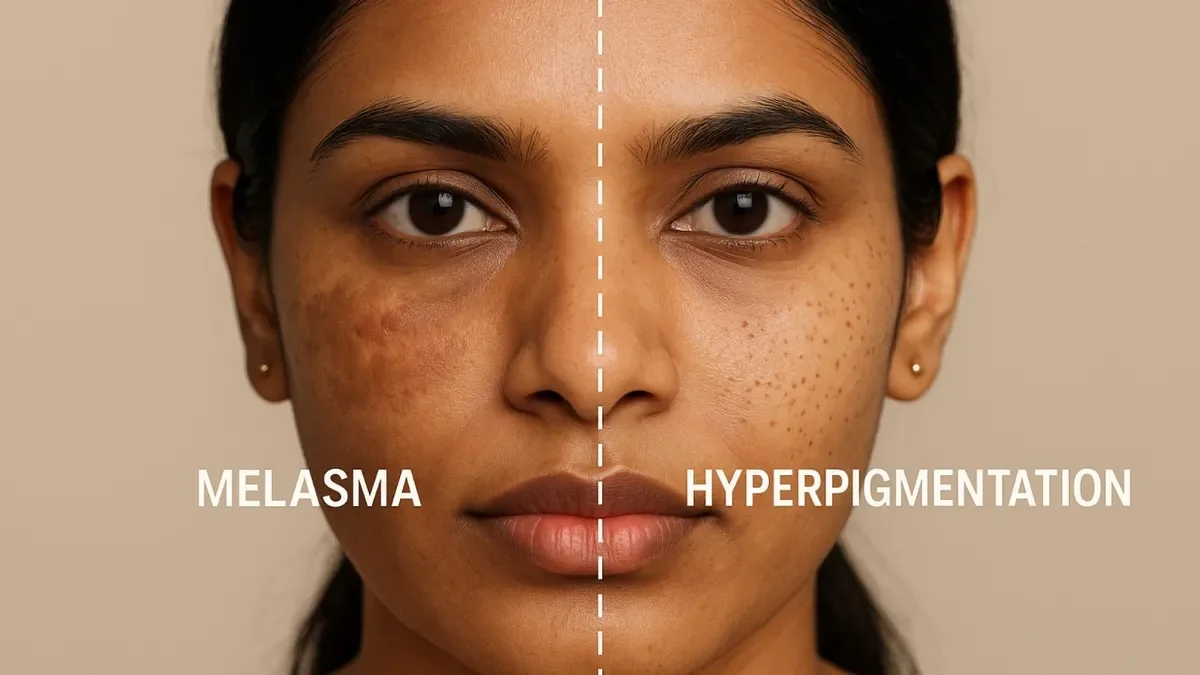
Melasma vs Hyperpigmentation: What's the Difference?
Skin pigmentation is a common concern that affects people of different ages and skin types. Dark spots, uneven skin tone, and brown patches can make the skin appear dull or uneven. Two terms often used to describe these concerns are melasma and hyperpigmentation.
Although melasma and hyperpigmentation are related, they are not exactly the same. Understanding their differences can help you choose suitable skincare products and professional treatment options.
What Is Hyperpigmentation?
Hyperpigmentation is a general skin condition in which certain areas of the skin become darker than the surrounding skin. It happens when the skin produces excess melanin, the natural pigment responsible for skin colour.
Common causes include sun exposure, acne marks, skin irritation, inflammation, hormonal changes, and certain medications.
Hyperpigmentation can appear as small dark spots, acne marks, or larger patches on the face and body. It may affect the cheeks, forehead, upper lip, hands, and other exposed areas.
What Is Melasma?
Melasma is a specific type of pigmentation that usually appears as brown, grey-brown, or darker patches on the face. It commonly affects the cheeks, forehead, nose, and upper lip.
Hormonal changes, sun exposure, visible light, and genetic factors can contribute to melasma. It is more common in women, particularly during pregnancy or when hormonal changes occur, but men can also develop it.
Melasma can be a long-term condition and may become darker with sun exposure. It often requires consistent skincare and professional guidance.
Melasma vs Hyperpigmentation: Key Differences
The main difference is that hyperpigmentation is a broad term for darkened skin areas, while melasma is a particular pigmentation condition.
Hyperpigmentation may develop because of acne, inflammation, injuries, or sun damage. Melasma is more commonly associated with hormonal influences, sun exposure, and genetic factors.
Hyperpigmentation can appear anywhere on the body, whereas melasma usually develops on the face. Treatment also varies depending on the cause, depth, and severity of pigmentation.
What Causes Melasma and Hyperpigmentation?
Several factors can contribute to pigmentation problems.
Sun exposure is one of the most common factors. Ultraviolet rays can stimulate melanin production and make existing dark spots more noticeable.
Hormonal changes may trigger melasma, especially during pregnancy or when using certain hormonal medications.
Acne and skin inflammation can also leave dark marks after the original problem has healed. This is known as post-inflammatory hyperpigmentation.
Using harsh skincare products, irritating treatments, or unsuitable exfoliants may worsen pigmentation in some people.
How Can You Manage Hyperpigmentation?
Managing hyperpigmentation starts with identifying its cause. A dermatologist or qualified skincare professional can assess your skin and recommend an appropriate routine.
Daily sunscreen is essential. Choose a broad-spectrum sunscreen with SPF 30 or higher and reapply it as directed, particularly when spending time outdoors.
Ingredients such as vitamin C, niacinamide, azelaic acid, and retinoids may help improve certain types of pigmentation. However, the right product depends on your skin type and condition.
Avoid picking acne, using harsh scrubs, or applying multiple strong active ingredients without professional advice.
Treatment Options for Melasma
Melasma treatment focuses on controlling pigmentation and reducing the chances of recurrence. A skincare professional may recommend topical products, prescription treatments, or selected in-clinic procedures depending on your skin condition.
Chemical peels and certain laser-based treatments may be considered for suitable patients. However, not every procedure is appropriate for every type of melasma. Some treatments can worsen pigmentation if performed incorrectly.
Sun protection remains an important part of managing melasma, even after improvement.
When Should You Consult a Skin Specialist?
If dark patches continue to spread, become more noticeable, or do not improve with basic skincare, consider consulting a dermatologist.
Professional assessment is particularly important before starting strong pigmentation treatments or undergoing chemical peels and laser procedures.
A specialist can help determine whether you have melasma, post-inflammatory hyperpigmentation, sun spots, or another skin condition.
Frequently Asked Questions
Is melasma the same as hyperpigmentation?
No. Hyperpigmentation is a general term for darker areas of skin, while melasma is a specific condition that causes brown or grey-brown patches, commonly on the face.
Can melasma go away permanently?
Melasma can improve with appropriate treatment and sun protection, but it may return. Long-term management is often necessary.
Does sunscreen help with melasma?
Yes. Daily broad-spectrum sunscreen helps protect the skin from ultraviolet exposure, which can worsen melasma. Tinted sunscreen containing iron oxides may also help protect against visible light.
Can acne cause hyperpigmentation?
Yes. Acne-related inflammation can leave dark marks after pimples heal. These marks are known as post-inflammatory hyperpigmentation.
Which treatment is best for pigmentation?
There is no single treatment suitable for everyone. The best option depends on the type of pigmentation, skin sensitivity, and underlying cause.
Get Professional Skincare Guidance in Lahore
Understanding the difference between melasma and hyperpigmentation is the first step toward better skin care. With the right routine, sun protection, and professional assessment, many pigmentation concerns can be managed effectively.
At The Skin Care Studio Lahore, you can seek professional skincare guidance to understand your pigmentation concerns and explore suitable treatment options.
For more information, visit The Skin Care Studio or contact the clinic.
This article is for general educational purposes and is not a substitute for professional medical advice.