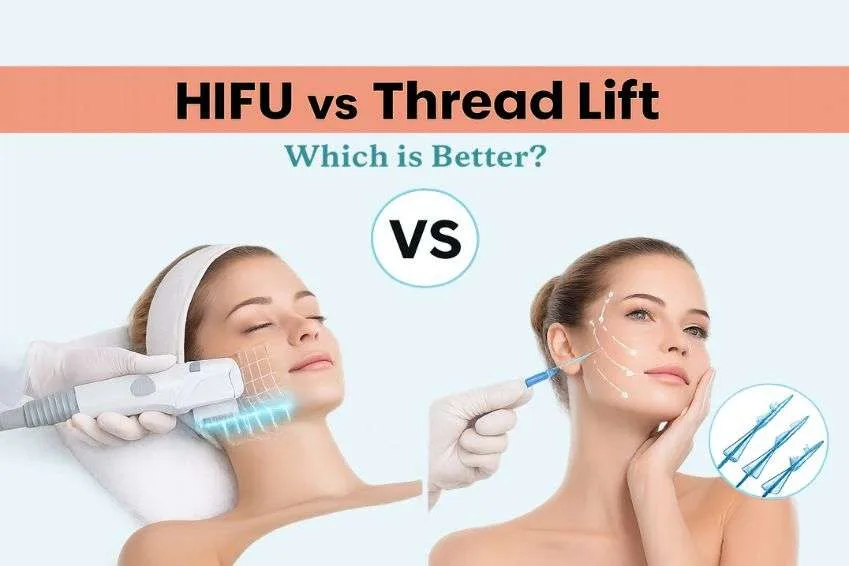
HIFU vs PDO Threads: Which Treatment Is Suitable?
As people become more interested in non-surgical skin tightening and facial rejuvenation, treatments such as HIFU and PDO threads have gained significant attention. Both procedures are designed to improve the appearance of sagging skin, support facial definition, and address visible signs of ageing. However, they work in different ways and are suitable for different skin concerns.
One common question people ask before choosing a treatment is: HIFU vs PDO Threads, which treatment is more suitable?
The answer depends on several factors, including skin laxity, facial structure, age-related changes, treatment expectations, and individual skin conditions. HIFU uses focused ultrasound energy to target deeper tissue layers, while PDO threads involve absorbable medical threads placed beneath the skin to provide mechanical support and stimulate collagen production.
Understanding the differences between these treatments can help you make an informed decision. In this guide, we explain how HIFU and PDO threads work, their benefits, expected results, recovery periods, and which option may be more appropriate for different facial concerns.
What Is HIFU Treatment?
HIFU stands for High-Intensity Focused Ultrasound. It is a non-surgical cosmetic procedure that uses concentrated ultrasound energy to heat targeted tissue layers beneath the skin. This controlled thermal effect stimulates the body's natural collagen-remodelling process.
Collagen is an important structural protein that helps maintain skin firmness, elasticity, and support. As people age, collagen production gradually decreases, which can contribute to loose skin, fine lines, and changes in facial definition.
HIFU treatment is designed to address some of these concerns by delivering focused energy at selected depths. Depending on the device and treatment plan, ultrasound energy may target deeper skin layers and supportive tissue structures.
HIFU is commonly considered for concerns involving mild to moderate skin laxity around the jawline, cheeks, chin, neck, and brow area. It does not involve surgical incisions or the placement of threads beneath the skin.
What Are PDO Threads?
PDO threads are absorbable medical sutures made from polydioxanone, a material used in certain medical applications. In aesthetic treatments, these threads are placed beneath the skin using specialised needles or cannulas.
PDO thread treatment is designed to provide support to selected facial tissues while also encouraging collagen production during the body's natural healing response.
Different types of PDO threads are available for different aesthetic purposes. Some threads have small barbs or cones that help provide mechanical lifting and support, while smooth threads are generally used to encourage collagen stimulation without the same lifting mechanism.
PDO threads may be considered for selected concerns involving facial sagging, reduced jawline definition, and mild tissue displacement. The treatment is minimally invasive because it involves inserting threads beneath the skin, even though it does not require conventional surgery.
The results depend on the thread type, placement technique, facial anatomy, and individual healing response.
HIFU vs PDO Threads: What Is the Main Difference?
The biggest difference between HIFU and PDO threads is how each treatment works.
HIFU uses focused ultrasound energy to heat selected tissue layers and stimulate collagen remodelling. It aims to improve skin firmness gradually without inserting any material beneath the skin.
PDO threads use absorbable sutures placed under the skin. Depending on their design, they may provide immediate mechanical support or lifting in addition to stimulating collagen production.
HIFU is generally considered for people with mild to moderate skin laxity who prefer a non-invasive approach. PDO threads may be considered when a practitioner identifies a need for additional mechanical support or lifting in selected facial areas.
Neither treatment is universally better. The most appropriate option depends on the individual's facial anatomy, degree of skin laxity, expectations, and suitability for the procedure.
How Does HIFU Improve Skin Tightening?
HIFU delivers focused ultrasound energy to specific depths beneath the skin. This energy creates controlled thermal points that trigger the body's natural repair and collagen-remodelling processes.
Following treatment, collagen production and remodelling may gradually improve the appearance of skin firmness. The process takes time because the body needs several weeks or months to develop visible changes.
Some individuals notice early improvements, while more noticeable results may develop over approximately two to three months. Results vary depending on the device, treatment settings, skin condition, and individual response.
HIFU may be considered for people who want to improve the appearance of mild skin laxity around the lower face, jawline, cheeks, and neck without undergoing a surgical procedure.
However, HIFU is not a substitute for surgical lifting when significant excess skin or advanced facial sagging is present.
How Do PDO Threads Provide Facial Lifting?
PDO threads work through a combination of mechanical support and collagen stimulation, depending on the type of thread used.
When lifting threads are placed beneath the skin, their specialised design can help support selected facial tissues. This may create an immediate visible lifting effect in appropriately selected patients.
Over time, the presence of the threads also stimulates a local tissue-healing response, which may encourage collagen production around the treated areas.
The threads gradually dissolve through the body's natural processes. Their absorption does not mean that every aesthetic benefit disappears immediately, as some collagen-related changes may continue after the threads have dissolved.
However, PDO thread results are temporary and vary considerably. Thread placement requires detailed knowledge of facial anatomy, and the procedure should only be performed by an appropriately qualified and experienced medical professional.
Which Treatment Is Better for Sagging Skin?
The suitability of HIFU or PDO threads depends on the severity and type of skin laxity.
People with mild to moderate skin looseness may be suitable candidates for HIFU, particularly when their primary goal is gradual improvement in skin firmness and facial definition.
PDO threads may be considered for selected individuals who have mild tissue displacement and want mechanical support in specific facial areas. The treatment may be appropriate when the practitioner believes that thread placement can safely achieve the desired effect.
People with significant skin excess or advanced facial sagging may not achieve their desired outcome with either procedure alone. A consultation is necessary to determine whether a non-surgical approach is appropriate or whether another treatment should be considered.
HIFU vs PDO Threads for Jawline Definition
The jawline is one of the common areas people want to improve when considering facial rejuvenation.
HIFU may help improve the appearance of mild skin laxity around the lower face and jawline by stimulating collagen remodelling in targeted tissue layers. The results generally develop gradually rather than appearing as an immediate mechanical lift.
PDO threads may provide additional support to selected tissues around the jawline, depending on thread design, placement, and facial anatomy.
The choice between these procedures depends on whether the main concern is general skin looseness or a more specific need for tissue repositioning.
It is also important to understand that neither procedure can guarantee a sharply defined jawline, particularly when fullness is primarily related to facial fat distribution or skeletal structure rather than skin laxity.
HIFU vs PDO Threads for Neck Tightening
The neck is another area where skin laxity and visible ageing changes can become noticeable.
HIFU may be considered for mild neck skin laxity because focused ultrasound energy can target selected tissue depths and stimulate collagen remodelling.
PDO threads may be considered in carefully selected cases where additional tissue support is appropriate. However, the neck contains important anatomical structures, making accurate assessment and treatment planning essential.
People with significant loose skin, prominent neck bands, or substantial tissue excess may need a different approach. A qualified practitioner should assess the underlying concern before recommending a cosmetic procedure.
How Long Do HIFU Results Last?
HIFU results develop gradually because the treatment relies on the body's collagen-remodelling response.
Some people notice improvements within the first few weeks, while more visible changes may develop over two to three months. The duration of results depends on age, skin condition, lifestyle, treatment quality, and natural ageing.
Some individuals may maintain improvements for several months or longer, although results are not permanent. As the natural ageing process continues, skin laxity can gradually return.
Maintenance treatments may be discussed when appropriate, but the timing should depend on the device used, the original treatment response, and professional assessment.
How Long Do PDO Thread Results Last?
PDO thread results vary depending on the type of thread, placement technique, individual tissue response, and the degree of lifting achieved.
An immediate lifting effect may be visible after treatment with certain barbed or lifting threads. Swelling and temporary tissue changes can initially influence the appearance of the treated area, so the final result should be assessed after the early recovery period.
PDO threads gradually dissolve over time, commonly over several months, depending on the material and thread characteristics. Some collagen-related benefits may continue after absorption, but the lifting effect is temporary.
The duration of visible results differs between individuals, and no specific timeframe can be guaranteed.
Are HIFU and PDO Threads Safe?
Both HIFU and PDO thread treatments can have risks and should only be performed following an appropriate assessment by a qualified practitioner.
HIFU may cause temporary redness, swelling, tenderness, or sensitivity. Some individuals experience discomfort during treatment. Less common complications can include burns, nerve-related symptoms, or unwanted tissue changes, particularly when treatment is performed incorrectly or with inappropriate settings.
PDO thread treatment may cause temporary swelling, bruising, tenderness, and unevenness. Other possible complications include infection, thread visibility, thread migration, dimpling, asymmetry, and nerve or blood vessel injury.
The risk profile depends on the patient's anatomy, treatment technique, equipment, and practitioner experience.
Before either procedure, patients should discuss their medical history, medications, previous cosmetic treatments, expectations, and possible complications with their treating professional.
What Is the Recovery Time for HIFU and PDO Threads?
One major difference between these treatments is the recovery process.
HIFU is generally a non-invasive procedure, so most people can return to their normal daily activities relatively quickly. Temporary redness, mild swelling, or tenderness may occur, but significant downtime is not usually expected.
PDO threads involve inserting material beneath the skin, so recovery can be more noticeable. Bruising, swelling, tenderness, and temporary skin irregularities may occur. Patients may receive specific instructions about facial movements, pressure, exercise, and skincare during the recovery period.
The exact recovery experience varies depending on the treatment area and individual response. Following professional aftercare instructions is important for both procedures.
Can HIFU and PDO Threads Be Combined?
In selected cases, a qualified practitioner may consider combining HIFU and PDO thread treatments as part of a broader facial rejuvenation plan.
The treatments work through different mechanisms. HIFU focuses on ultrasound-based tissue heating and collagen remodelling, while PDO threads may provide mechanical support and stimulate collagen production.
However, combining treatments is not suitable for everyone. The timing, treatment sequence, energy settings, and tissue recovery must be carefully considered.
Performing multiple procedures without an appropriate plan may increase the risk of complications or interfere with healing. A professional assessment should determine whether combining treatments offers a meaningful benefit for the individual's concerns.
Who Is a Suitable Candidate for HIFU?
HIFU may be considered for adults who have mild to moderate skin laxity and want a non-invasive approach to facial rejuvenation.
People concerned about early jawline changes, mild cheek sagging, or loose skin around the neck may benefit from an assessment to determine whether HIFU is appropriate.
It may be less suitable for individuals with significant excess skin, certain active skin conditions, or anatomical factors that make treatment unsafe. Suitability also depends on the specific device and the treatment area.
A consultation should establish realistic expectations and identify any reasons to avoid or postpone the procedure.
Who Is a Suitable Candidate for PDO Threads?
PDO thread treatment may be considered for adults with selected signs of mild facial tissue sagging who want a minimally invasive lifting procedure.
Suitable candidates generally need an appropriate facial anatomy and sufficient tissue characteristics for safe thread placement. People with substantial skin excess may not achieve satisfactory results from threads alone.
Individuals with certain infections, bleeding disorders, relevant medical conditions, or other contraindications may not be suitable. Pregnancy and breastfeeding should also be discussed with a medical professional before considering an elective cosmetic procedure.
The treating practitioner should explain the possible benefits, limitations, alternatives, and complications before treatment.
Where Can You Get Skin Tightening Treatments in Lahore?
Choosing the right clinic is an important part of any facial rejuvenation treatment. Both HIFU and PDO threads require proper assessment, appropriate technology or medical materials, and an understanding of facial anatomy.
The Skin Care Studio in Johar Town, Lahore, provides cosmetic skincare and facial rejuvenation services for individuals interested in improving the appearance of skin firmness and facial definition.
Before selecting HIFU or PDO threads, a consultation can help identify your primary concern, assess your skin condition, and discuss whether a particular treatment is suitable.
You can explore our HIFU Treatment in Lahore services to learn more about available skin tightening options. You can also visit the American Academy of Dermatology for additional educational information about cosmetic skin procedures.
The goal of a professional consultation is to help you understand the available options and choose an approach that matches your individual needs and expectations.
Frequently Asked Questions About HIFU vs PDO Threads
Is HIFU better than PDO threads?
Neither treatment is universally better. HIFU may be more appropriate for gradual skin tightening without inserting threads, while PDO threads may be considered when selected areas require additional mechanical tissue support. The right choice depends on facial anatomy and skin laxity.
Which treatment gives faster results?
Certain PDO lifting threads can provide an immediate mechanical lifting effect, although swelling and recovery changes can affect the early appearance. HIFU results generally develop gradually as collagen remodelling takes place.
Is HIFU less invasive than PDO threads?
Yes. HIFU is a non-invasive ultrasound-based procedure, whereas PDO thread treatment involves inserting absorbable threads beneath the skin using needles or cannulas.
Can PDO threads replace a facelift?
PDO threads cannot provide the same results as surgical facelift procedures. They may improve selected cases of mild tissue sagging, but they are not a substitute for surgery when significant skin excess is present.
Does HIFU permanently tighten the skin?
No. HIFU may improve skin firmness through collagen remodelling, but the results are temporary and natural ageing continues.
Can HIFU damage facial fat?
Unintended tissue effects, including changes involving fat, are possible depending on treatment depth, energy settings, and anatomy. Proper assessment and careful device use are important to reduce risks.
How long do PDO threads take to dissolve?
PDO threads gradually dissolve through the body's natural processes, commonly over several months. The exact period depends on the thread type and individual tissue response.
Can I get HIFU and PDO threads together?
Some individuals may be suitable for a combined treatment plan. However, the procedures should be carefully planned by a qualified practitioner, including appropriate timing and recovery between treatments.
Is HIFU suitable for people in their 30s?
Some adults in their 30s may be suitable if they have early skin laxity and realistic expectations. Age alone does not determine suitability.
Which treatment is better for a double chin?
HIFU may be considered for selected cases involving skin laxity around the chin and jawline. However, a double chin can also result from fat distribution or skeletal anatomy. A proper assessment is necessary to identify the underlying cause and suitable treatment.
Final Thoughts: HIFU vs PDO Threads
HIFU and PDO threads are two different approaches to non-surgical facial rejuvenation. HIFU uses focused ultrasound energy to encourage collagen remodelling and gradual skin tightening, while PDO threads use absorbable sutures to provide selected areas with mechanical support and stimulate collagen production.
HIFU may be suitable for individuals looking for a non-invasive approach to mild skin laxity. PDO threads may be considered for selected individuals who need additional tissue support and are comfortable with a minimally invasive procedure.
Ultimately, the most suitable treatment depends on your facial anatomy, skin condition, treatment goals, and professional assessment. Rather than choosing a procedure based only on popularity, understanding the differences can help you make a more informed decision about your skin rejuvenation journey.