Full Body Laser Hair Removal: Areas Covered and What to Expect
For anyone who's spent years shaving, waxing, or plucking their way through every season, the idea of full body laser hair removal can feel like a genuine turning point. Instead of tackling one area at a time and constantly starting the clock over, a full body approach treats multiple regions in a coordinated plan, which tends to save both time and money in the long run. Still, "full body" can mean different things depending on the clinic, and knowing what's typically included, what the sessions actually feel like, and how to prepare can make the whole process far less intimidating.
What Does "Full Body" Actually Mean?
The term full body laser hair removal doesn't always mean every single inch of skin is treated. Most clinics build packages around the areas people request most often, and you can usually customize the plan to include or exclude specific zones based on your own preferences.
Common Areas Included
A typical full body package covers the legs, both upper and lower, along with the underarms, arms, back, chest, shoulders, bikini area, and often the face and neck. Some packages also include the stomach, buttocks, and feet, especially for people who deal with noticeable hair growth in those spots.
Areas That May Require Add-Ons
Certain areas, like the bikini line versus a full Brazilian, or the full back versus just the shoulders, are sometimes priced or scheduled separately since they involve more sensitive skin or a longer treatment time. It's worth asking your provider exactly what's bundled into their version of a "full body" package versus what counts as an add-on, since pricing structures vary quite a bit from clinic to clinic.
How Laser Hair Removal Works Across the Body
Laser hair removal works by directing concentrated light at the pigment inside each hair follicle. The follicle absorbs that light as heat, which damages its ability to produce new hair. Over repeated sessions, treated follicles tend to produce thinner, sparser hair, and eventually many stop producing hair altogether.
What changes across different body areas isn't really the technology itself, but the settings and technique. Skin on the face tends to be more sensitive than skin on the legs or back, so practitioners often adjust the laser's intensity and cooling methods depending on where they're working. Areas with thicker hair, like the underarms or bikini line, may also respond differently than areas with finer hair, like the arms or stomach.
Session Length by Area
Smaller areas like the upper lip or underarms might take only a few minutes per session, while larger areas like the full back or both legs can take closer to an hour. When you're doing a full body treatment in one visit, sessions can run anywhere from sixty to ninety minutes total, depending on how many zones are being covered and the technician's pace.
What to Expect During a Session
Walking into your first full body session, it helps to know roughly what the experience feels like so there aren't any surprises.
Before the Laser Starts
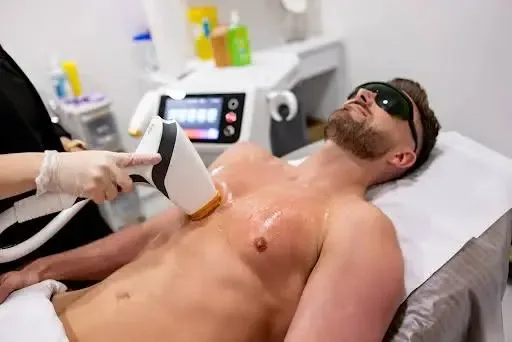
Before treatment begins, the treatment areas are usually shaved beforehand, since the laser needs to target the hair follicle beneath the skin rather than hair sitting above the surface. A cooling gel or cooling device is often applied to help minimize discomfort and protect the skin during the procedure. You'll also be given protective eyewear, since the laser light can be harmful to the eyes.
During Treatment
Most people describe the sensation as a quick snapping feeling, similar to a rubber band flicking against the skin, though this varies depending on the area being treated and your personal pain tolerance. Areas with thinner skin, like the upper lip, bikini line, or underarms, tend to be more sensitive than areas like the legs or back. The good news is that as sessions progress and hair thins out, many people find the sensation becomes noticeably milder over time.
After Treatment
Right after a session, it's common to see some redness or mild swelling around the treated follicles, similar to a light sunburn. This typically fades within a few hours to a day. Some areas, particularly the underarms or bikini area, might feel slightly more sensitive for a day or two afterward.
How Many Sessions Does Full Body Treatment Take?
Just like treating a single area, full body laser hair removal isn't a one-and-done process. Hair grows in cycles, and at any given time, only a portion of your hair follicles are in the active growth phase where the laser can effectively target them.
Most people need somewhere between six and ten sessions across the full body to see significant, lasting reduction, spaced roughly four to eight weeks apart depending on the area. Areas like the face and underarms tend to have faster growth cycles and may need slightly more frequent sessions, while areas like the legs and back often work well with sessions spaced further apart.
After the initial series is complete, many people find they only need occasional touch-up sessions once or twice a year to maintain results, particularly in areas where hormonal factors influence regrowth.
Preparing for Full Body Laser Hair Removal
Because full body treatment covers so much skin at once, a bit of preparation goes a long way toward making sessions smoother and reducing the risk of complications.
Sun Exposure
Avoiding tanning and direct sun exposure on the areas being treated is important in the weeks leading up to each session. Tanned or sunburned skin has more pigment, which can interfere with how the laser targets hair follicles and increases the risk of skin irritation or discoloration. Broad-spectrum sunscreen of at least SPF 30 is generally recommended for any exposed skin in the lead-up to treatment.
Shaving Beforehand
Since the laser needs to reach the follicle rather than hair above the skin, shaving the treatment areas a day or so before your appointment is usually recommended. Waxing, plucking, or threading beforehand should be avoided, since these methods remove the hair from the root, leaving nothing for the laser to target.
Medications and Skin Conditions
Certain medications, particularly those that increase sun sensitivity, along with active skin conditions like eczema, psoriasis, or open wounds, can affect whether an area is safe to treat. Being upfront with your practitioner about your full medical history and any medications you're taking helps them adjust their approach or flag areas that may need to wait.
Is Full Body Laser Hair Removal Right for Everyone?
Laser hair removal works best on hair that has enough pigment for the laser to target, which means very light blonde, white, gray, or red hair may not respond as well across any part of the body. Skin tone also plays a role in determining the right laser type and settings, which is why a consultation with an experienced practitioner matters just as much for a full body plan as it does for treating a single area.
For anyone dealing with hormonally influenced hair growth, it's also worth remembering that laser treatment offers long-term reduction rather than a guaranteed permanent result across every area treated.
Making the Most of a Full Body Treatment Plan
Committing to full body treatment is a bigger decision than treating one area, both in terms of time and cost, so it helps to go in with realistic expectations and a clear sense of which areas matter most to you. A thorough consultation beforehand should walk through your skin tone, hair characteristics, medical history, and goals, so the resulting treatment plan is actually built around your body rather than a generic template.
At The Skin Care Studio, full body consultations are designed to map out exactly which areas make sense for you, how many sessions to expect, and a realistic timeline based on your individual hair and skin characteristics rather than a one-size-fits-all estimate.
A quick note: results vary from person to person, and no cosmetic treatment should be presented as a guaranteed permanent outcome. Anyone noticing sudden or unusual hair growth patterns should have that evaluated medically rather than only pursuing cosmetic treatment.